From Lived Experience to Product:
Designing Calmer Canvas
The Spark
As designers with ADHD and Highly Sensitive Person (HSP) traits, we often struggled with digital tools that didn’t consider how we think, focus, or process information. Designing in Figma only amplified this frustration — accessibility plugins were available, but they focused exclusively on visual or motor impairments.
There were no tools addressing what we experience daily: cognitive load, visual overwhelm, or attention fragmentation.
That’s when I joined forces with Jodie Emery, who had already begun developing an accessibility tool. Working together, we realized we shared the same pain point — and I identified a clear gap in the market: nothing existed to help designers create cognitively accessible interfaces for neurodivergent users like us.
The Market Gap
Despite more than a billion people being neurodivergent, design tooling largely ignores cognitive accessibility. Most plugins focus on contrast or screen readers—leaving those with ADHD, autism, or sensory sensitivities behind.
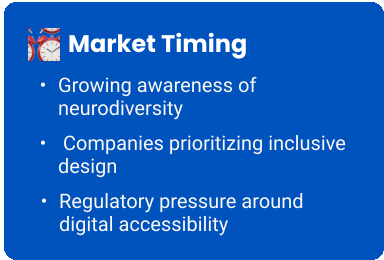
Through my research and our shared experiences, I identified several key market realities:
What We Did
Phase 1: Define the Opportunity
We began with our lived experiences—journaling and mapping barriers we both face in digital spaces. I then led the synthesis of these insights into actionable design requirements:
- Sensory overload from cluttered layouts
- Inconsistent visual rhythm
- Distracting animations or patterns
- Decision paralysis from too many options
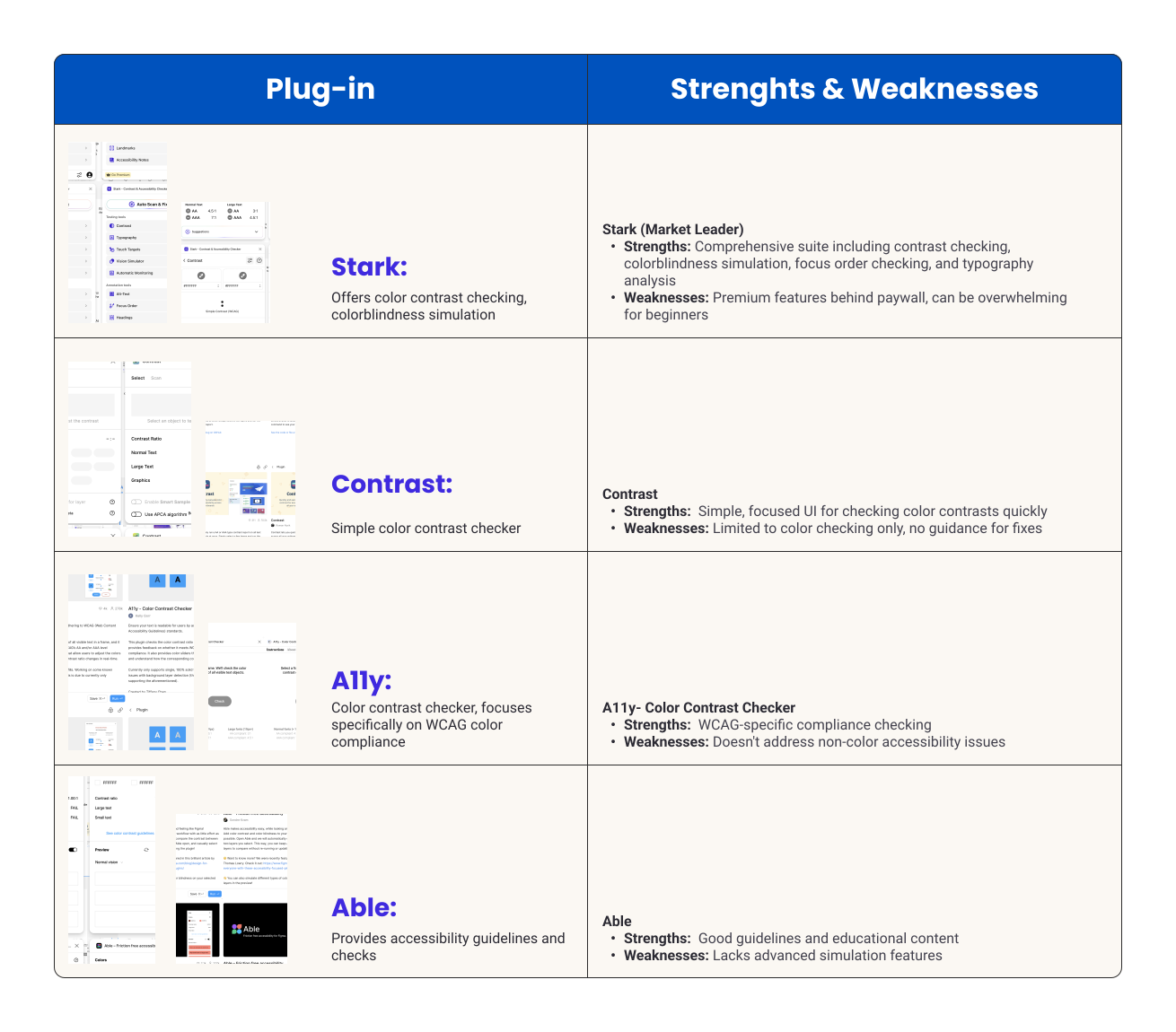
I conducted a comprehensive competitive analysis of ~15 plugins and cross-referenced these findings with the barrier patterns we had identified through our journaling.
Phase 2: Narrow the Focus
To make the scope manageable, we focused on one quantifiable problem: visual complexity. We defined "visual noise" using measurable factors:
- Color density
- Element overlap
- Spacing and rhythm
- Font readability
Working as a team, we split responsibilities based on our strengths: Jodie focused on detection logic, while I took ownership of UX structure and interaction design.
Phase 3: Build the Prototype
As a team, we built a plugin where I designed the user experience to:
- Analyze visual noise in real-time
- Highlights areas of high visual density or sensory strain
- Provides actionable suggestions without shaming the designer
I designed and prioritized an onboarding experience that was non-intimidating and respectful of neurodivergent attention spans.
Turning Point: No Standards, No Playbook
The Challenge
There were no established guidelines for cognitive accessibility — no WCAG equivalent, no shared tools, no consistent practices.
Our Move
We introduced Will Soward’s neurodivergent design principles as a base. From there, I helped define our own plugin-ready heuristics:
- Guide attention with gentle visual hierarchy
- Minimize unpredictability in layout and motion
- Preserve flexibility in visual style
- Support diverse cognitive styles, from step-by-step to overview-first
The Technical Barrier
There were no APIs or libraries to measure things like “visual noise” — we had to build the logic ourselves.
How We Solved It
Jodie developed custom metrics from scratch, while I collaborated with her to define and test the logic for:
- Color density
- Element overlap
- Spacing consistency
It took trial, error, and iteration — but these models now power our prototype’s real-time analysis engine.
Final Deliverables
-
✅ A functioning Figma plugin prototype
✅ Cognitive load logic powered by JavaScript
✅ Early UX design with onboarding flow and recommendations
Four-Pillar Strategy
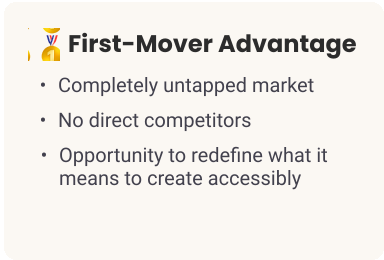
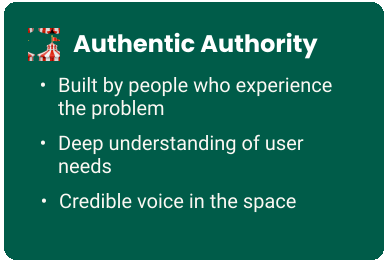
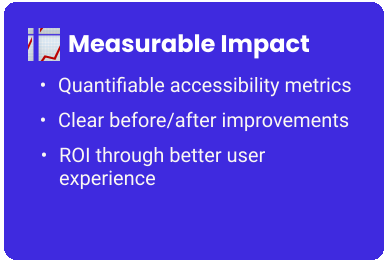
I developed our market positioning strategy around four key pillars that our team aligned on:
Still on the Checklist
- Internal Testing — Validation with neurodivergent designers
- Logic Refinement — Perfecting color and overlap algorithms
- Performance Optimization — Real-time feedback without slowdowns
- Launch the Movement — Redefine accessibility to include neurodiversity, not just traditional disabilities
Curious about the full scope? This Figma file shows my research, design heuristics, flow concepts, and plugin collaboration in one place.
Why This Work Matters
Calmer Canvas isn’t just a plugin — it’s a shift in how we think about accessibility. By designing for our own neurodivergent experiences as a team, we're creating digital spaces that are calmer, clearer, and kinder — not just for some, but for everyone.
What I Learned Through This Collaboration
- Lived experience is powerful — it helped our team solve a problem no tool addressed
- Design can lead — our team didn't wait for a framework, we created our own
- Accessibility is evolving — and we’re helping define what’s next
I'm continuously learning and improving this project.
I'm eager to get feedback from others who are passionate about accessibility or product design.
If you have thoughts, suggestions, or would like to discuss how Calmer Canvas could evolve — I’d love to hear from you!