Unlucky E-commerce Platform
Full E-Commerce Platform Built to Boost User Confidence and Reduce Returns

🎯 Research-Based Projections
Grounded in industry benchmarks, user feedback, and design principles, this platform addresses key e-commerce pain points with measurable and strategic solutions.
Conversion Rate
Found AR Helpful
Quiz Completion
End-to-End Delivery
Optimized for Mobile
Philosophy-Driven
⛰️ Uncover the Odds
A streetwear entrepreneur approached me with a unique brand philosophy: turning "unlucky" moments into empowerment. The challenge was designing a complete e-commerce platform that would embody this philosophy while solving real user problems in online fashion shopping.
Key Design Challenges:
- Create authentic brand experience from abstract philosophy
- Address sizing and fit uncertainty in online clothing sales
- Design differentiation in saturated streetwear market
- Build user confidence without physical try-on experience
- Develop complete platform from concept to interactive prototype
🚀 Market Potential
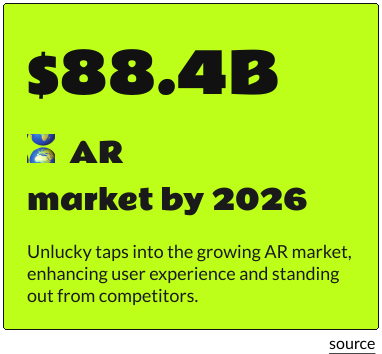
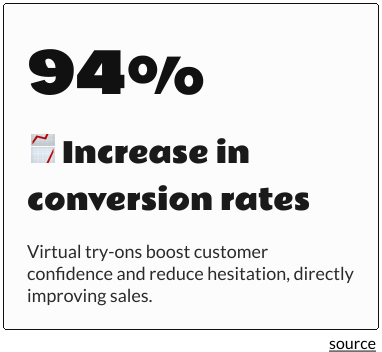
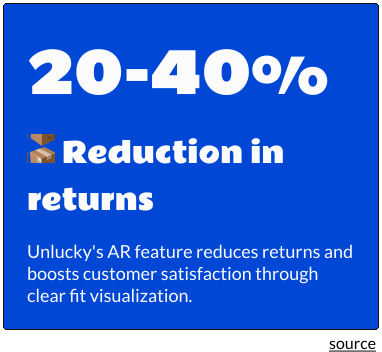
To understand the potential impact, here are key insights from the AR and e-commerce space:
🔍 The Hunt
To ground the design in real market needs and user behaviors, I conducted comprehensive research across multiple areas.
Research Methods:
- Competitive Analysis: Analyzed 6+ Rotterdam-based streetwear brands for feature gaps and positioning opportunities
- Market Research: Investigated AR adoption trends in e-commerce and their impact on conversion rates
- User Interviews: In-depth conversations with target demographic about online shopping behaviors
- Persona Development: Created data-driven user personas based on research findings
- User Journey Mapping: Identified pain points in typical streetwear shopping experience
Key Research Insights:
- 0/6 local competitors use AR or interactive technologies
- Sizing uncertainty drives 60% of returns in online fashion
- Users prefer emotional connection over traditional style categories
- Mobile-first approach critical for target demographic (20-35)
💭 Competitor Analysis
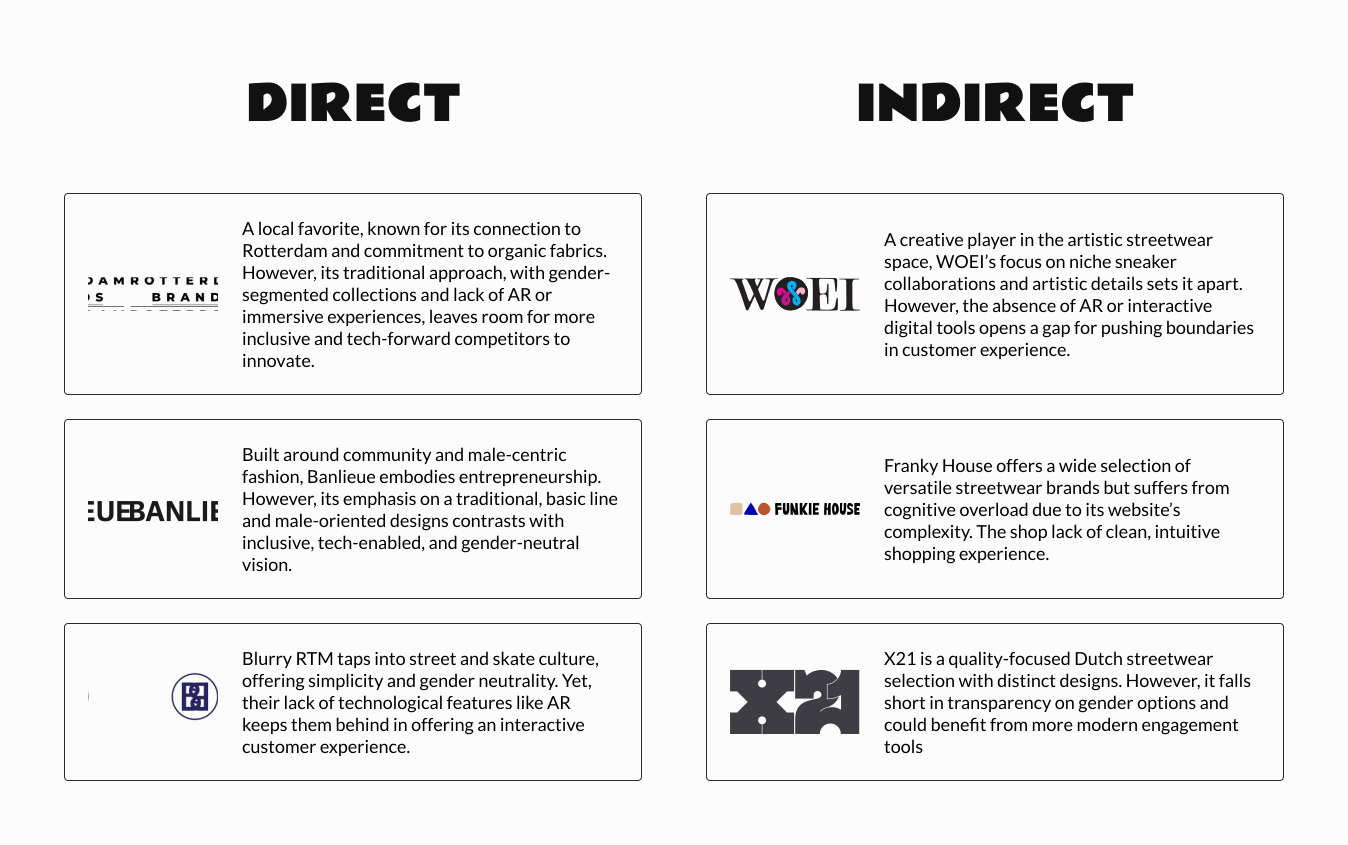
Key Takeaways:
- 🎯 Clear Market Gap: 0/6 analyzed brands use AR or interactive technologies, creating first-mover advantage for Unlucky's innovative approach
- 🌈 Inclusivity Opportunity: Limited gender-neutral positioning across competitors aligns with Unlucky's inclusive brand philosophy
- 📱 Digital Experience Gap: Traditional e-commerce approaches dominate the market - most competitors lack modern interactive technologies, creating opportunity for innovative customer engagement
👤 User Personas

💡 Shape Your Path
Based on our research findings, two key opportunities emerged to address user pain points:
Core Hypothesis
If we combine mood-based personalization with virtual try-on technology, we can reduce purchase hesitation and create a more confident shopping experience for streetwear customers.
Mood-Based Quiz
Address the "overwhelming choice" problem by curating products based on emotional connection rather than traditional categories
Virtual Try-On
Tackle fit uncertainty by allowing users to visualize how clothes look on them before purchasing
Expected Outcome: Users will feel more confident in their purchases, leading to higher conversion rates and fewer returns.
🗺️ Outlining the Design Journey
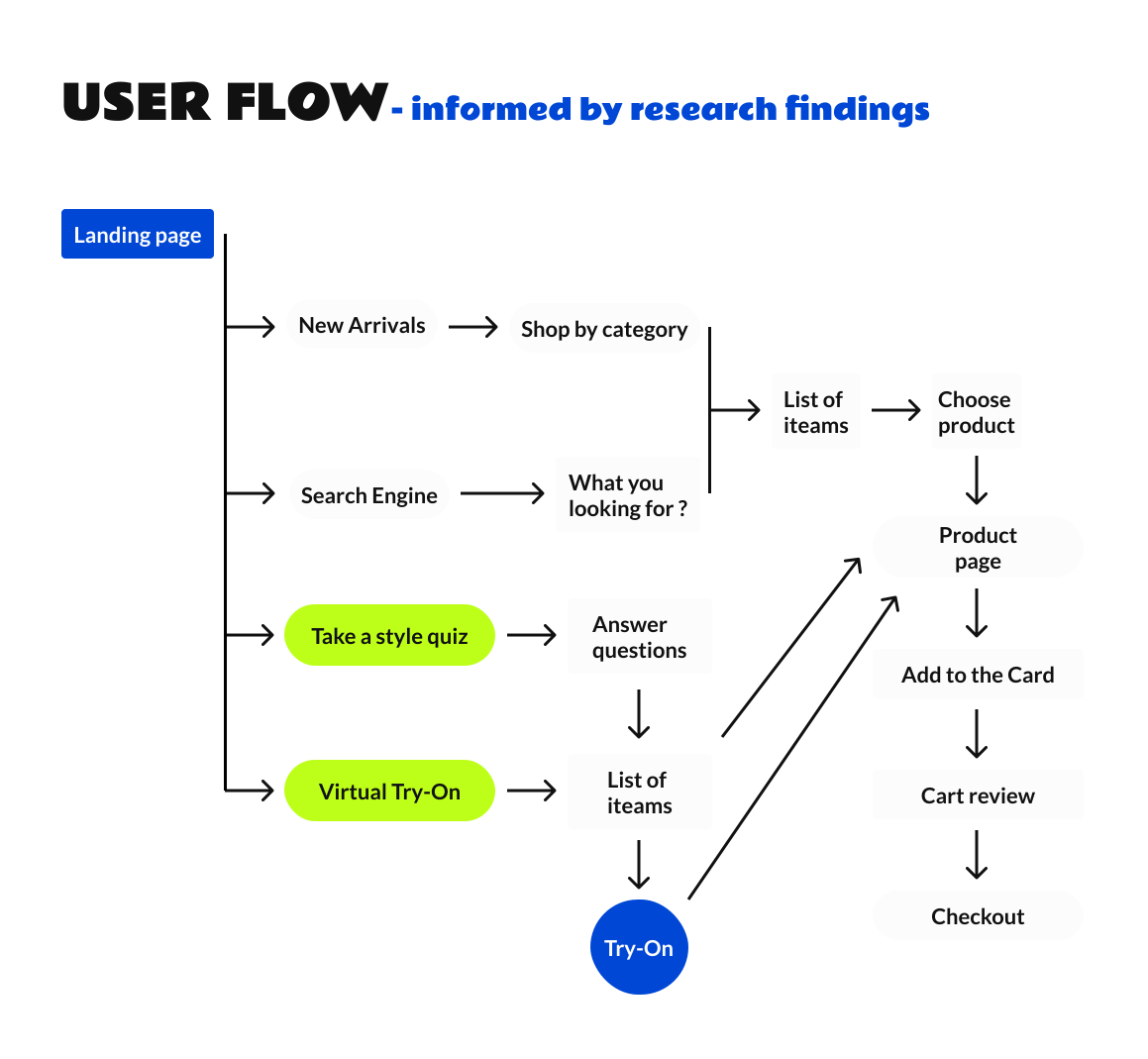
My design approach followed a structured journey from initial discovery through validation and iteration, with each phase building toward the final solution.
🔄 User Flow
📝 Early Wireframes
🛠️ Lo-fi Prototype
Starting with low-fidelity explorations to map out core functionality

🛠️ Hi-fi Prototype
Initial high-fidelity design ready for user validation. This version focused on functionality over visual polish.
🧪 Prove Your Luck
- Participants: 5 users (ages 20–35, target demographic)
- Method: Moderated prototype testing with task-based scenarios
- Goal: Validate core features and uncover usability barriers
🔑 Key Tasks Tested
- Complete and engage with the style quiz
- Discover and use the virtual try-on feature
- Browse products using filters
- Navigate the app effectively
Critical Insights That Shaped Design
Style Quiz → Mood Quiz Pivot
"Small range of answers, too specific. Not style, but vibe, or to a particular outfit."
Insight: Users sought an emotional connection over rigid style categories.
Design Response: Developed a mood-based curation system aligned with brand philosophy.
AR Try-On Reality Check
"Such a feature is not useful at all, it does not look interesting or real. The colors are not rendered."
Insight: Technical execution was essential to building user trust in AR.
Design Response: Improved visual fidelity and introduced clearer onboarding to set expectations.
Navigation & Discoverability
"When I checked the burger menu I found style quiz and virtual try on... That doesn't seem to be the right place."
Insight: Key features were hidden and needed stronger visibility.
Design Response: Relocated features to main homepage sections for easier discovery.
Research Learnings
While this study provided valuable directional insights, I recognize the methodology could be improved. The questions were leading (asking "how interesting" rather than observing natural reactions) and tasks were solution-focused rather than problem-focused.
- For future research: I would use more open-ended discovery methods and observe natural user behavior rather than validating predetermined features.
Impact on Final Design
Despite methodological limitations, authentic user feedback drove three major pivots that strengthened the final solution and validated core assumptions about user needs.
⚡ Craft Fate
Key improvements made based on user feedback:
- Navigation: Moved quiz and AR features to prominent homepage placement
- Visual Polish: Enhanced UI consistency and micro-interactions
- AR Interface: Improved visual fidelity and clearer onboarding flow
These improvements led to two core features that address users' primary pain points:
Mood Quiz - Personalized Product Discovery
Problem: Users struggled with overwhelming product choices and irrelevant recommendations.
Solution: Replaced traditional style quiz with mood-based curation system.
Business Impact:
- Enhanced user engagement through personalization
- Increased session duration and product discovery
- Aligned with brand philosophy of "shaping your fate"
Virtual Try-On (AR) - Confidence in Purchase Decisions
Problem: 20-40% return rates due to fit and style uncertainty.
Solution: Real-time AR visualization allowing users to see clothing on themselves.
Projected Business Impact:
- Industry benchmarks suggest 94% potential increase in conversion rates
- Could reduce returns by 20-40% through better product visualization
- Competitive differentiation in the streetwear market
🎨 Style & Identity
To ensure consistency across all touchpoints and support the innovative AR features, I developed a comprehensive design system that reflects Unlucky's urban streetwear identity.
Built a scalable component library in Figma featuring vibrant green accents, clean typography, and responsive components optimized for both mobile and desktop. Created specialized UI patterns for AR interactions, ensuring visual elements don't interfere with camera overlay while maintaining clear visual hierarchy.
Business Impact:
- Delivered cohesive user experience across mood quiz, AR try-on, and shopping features
- Streamlined development handoff and reduced design iterations
- Established foundation for future feature expansion and brand growth
Final flow
Shift the Odds
💡 Strengths
- Personalization through mood-based curation increased relevance and engagement
- AR try-on generated strong interest, confirming its potential as a differentiator
- Iterative, user-centered approach ensured the design stayed aligned with real needs
🔧 Opportunities
- Improve AR fidelity to make try-on results more convincing and realistic
- Enhance performance for broader device compatibility and smoother use
- Refine research methods with more open-ended discovery and less solution bias
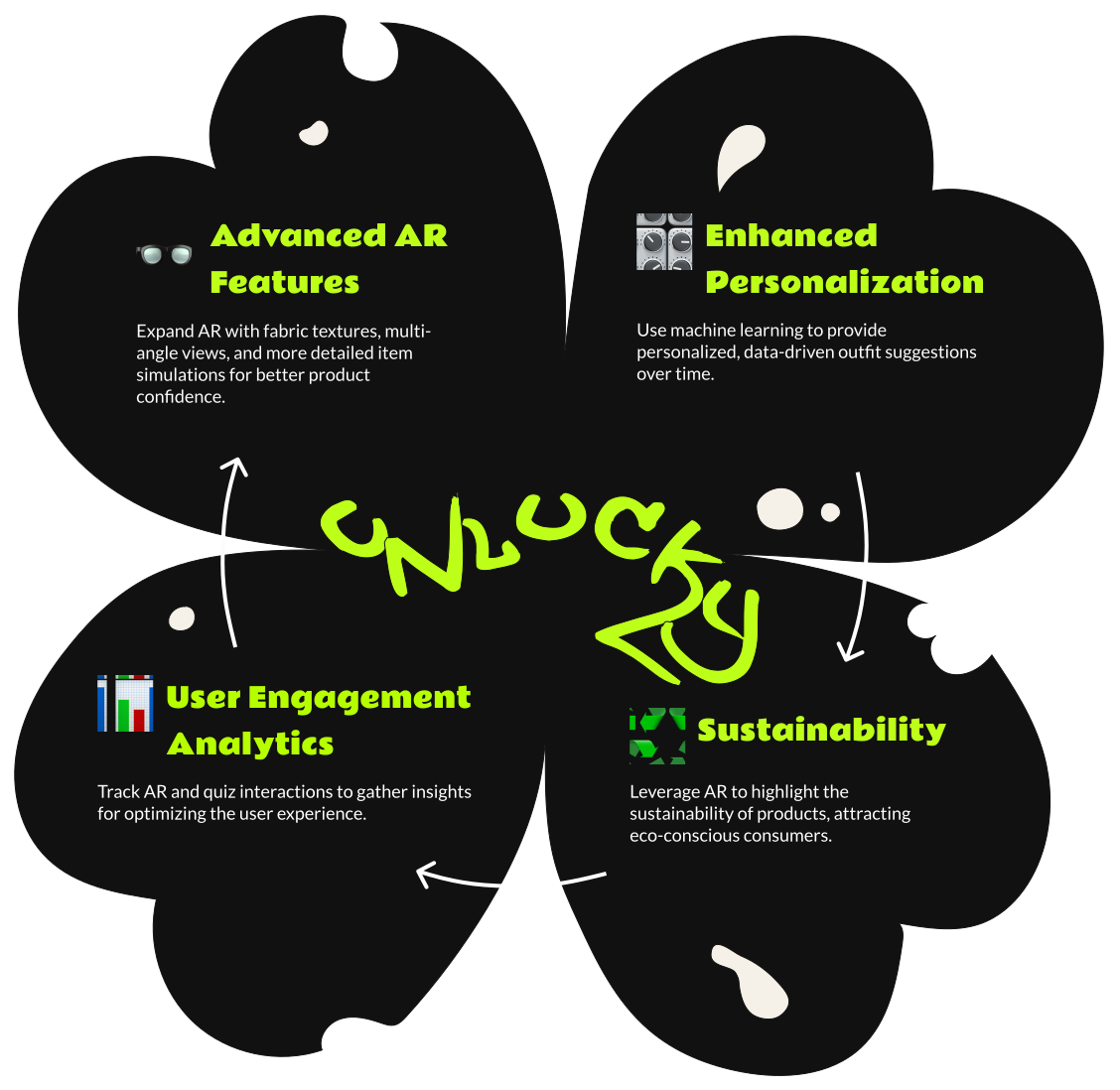
👣 Future Roadmap